Protect Wasatch Climbing: Defend the Roadless Rule
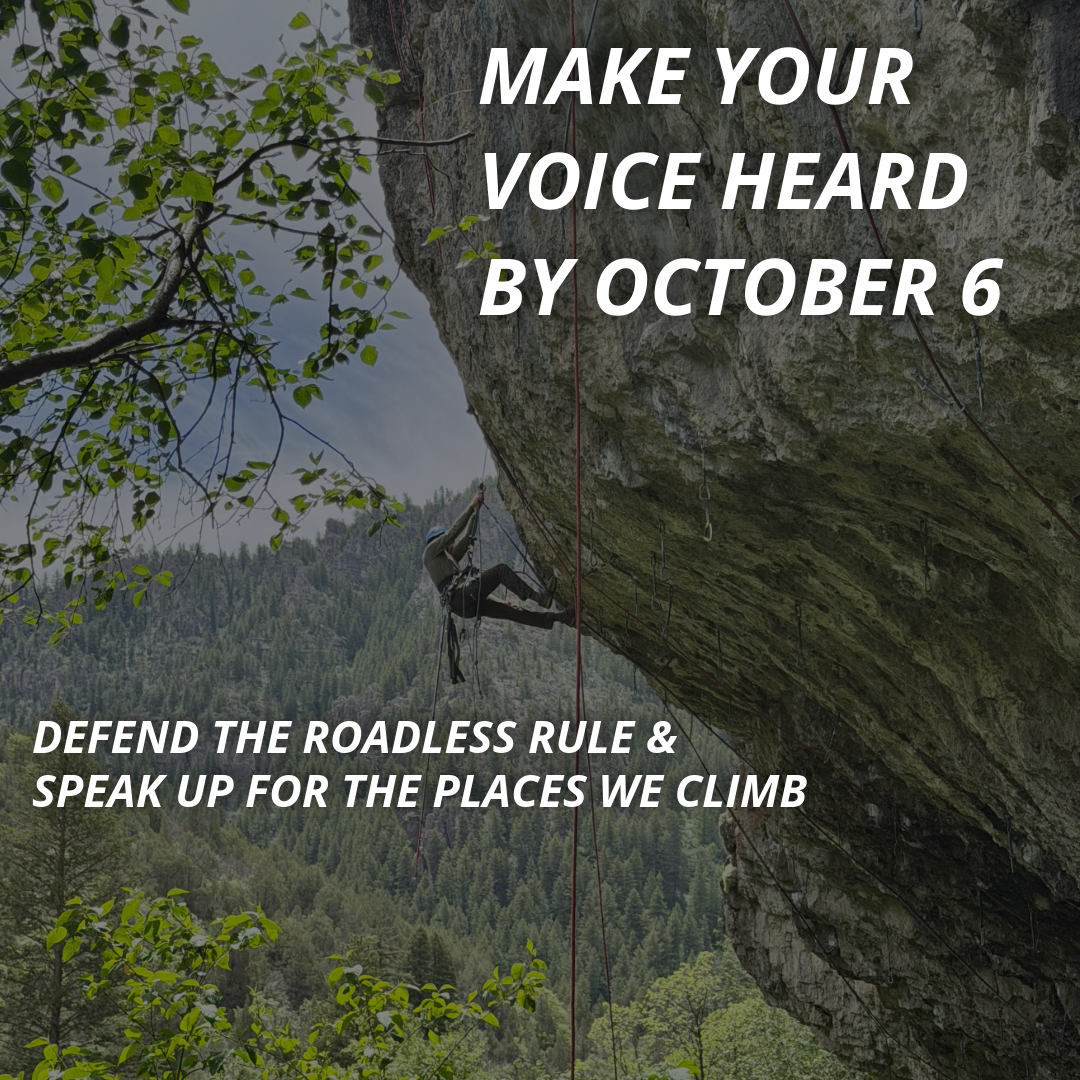
Utah’s roadless national forests — the places we climb, hike, ski, and find solitude — are facing a serious threat. The USDA has proposed rescinding the 2001 Roadless Rule, a bedrock conservation policy that has protected 58.5 million acres of national forest land for more than two decades. If this rollback moves forward, many of Utah’s most beloved backcountry areas could be opened to road‑building, logging, and industrial development.
The Roadless Rule has worked for 23 years because it protects what makes these forests special:
intact wildlife habitat
clean drinking water
quiet recreation
undeveloped climbing landscapes
healthy forests that don’t require costly road maintenance
Rolling it back would put all of that at risk.
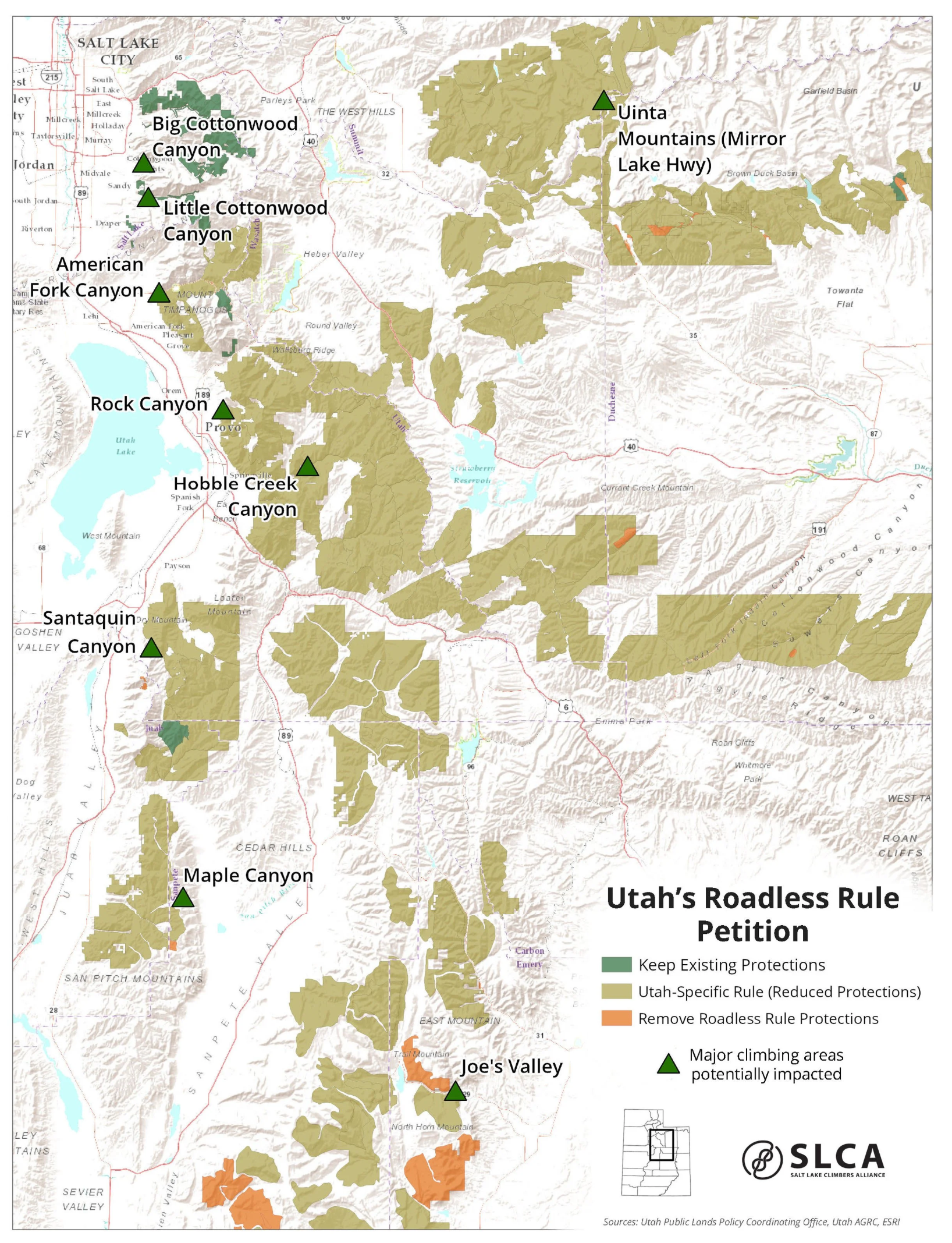
For Wasatch climbers, this isn’t abstract. Roadless areas include landscapes that shape our community’s identity: Big Cottonwood Canyon, Little Cottonwood Canyon, American Fork Canyon, Joe’s Valley, Logan Canyon, and so many more. These are the places where generations of climbers learned, explored, and built the culture we now carry forward.
SLCA’s Recommendationsto the USDA
Retain the 2001 Roadless Area Conservation Rule and its national protections for inventoried roadless areas.
Prioritize adaptive management and targeted solutions rather than nationwide rescission of the Roadless Rule.
Continue and expand collaborative management models such as Utah Shared Stewardship that bring federal, state, local, watershed, fire, recreation, and conservation partners together.
Prioritize maintenance and restoration of the existing National Forest road system before creating additional long-term road infrastructure and maintenance obligations.
Maintain roadless characteristics important to human-powered recreation, historic climbing landscapes, watersheds, wildlife, solitude, and undeveloped viewsheds.