
Advocacy: Seasonal Closure at Henefer-Echo WMA: Protecting Critical Winter Range
Climbing access at Henefer-Echo WMA is closed each winter to protect big game during a critical survival period. Thank you for respecting this seasonal closure so that climbers can maintain access the rest of the year.
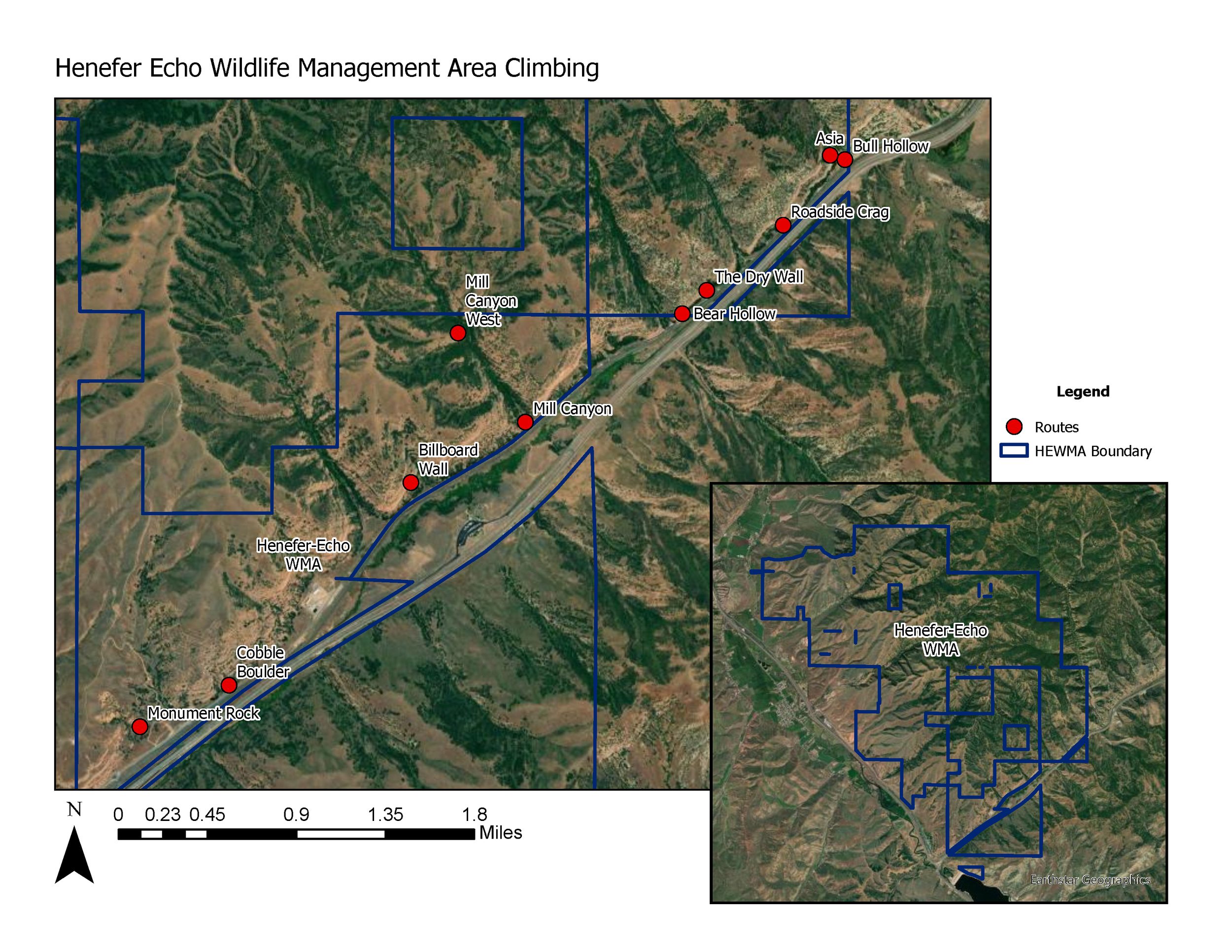
The Utah Division of Wildlife’s (DWR) Henefer-Echo Wildlife Management Area (WMA) was purchased for the primary purpose of preserving and protecting big game winter range, wintering wildlife, and reducing deer and elk depredation on surrounding private properties. This WMA provides an ever-critical role in providing vital winter resources for mule deer and elk as more urban development occurs around Summit County. The WMA is closed January 1 - the second Saturday in April, including the portion of climbing access on the WMA.
The WMA is subject to state laws, administrative rules, and federal aid encumbrances that restrict how the property is managed and what public uses are allowed. Administrative rule R657-28-3: Management of Division Lands defines that division lands are managed to “directly or indirectly protect and improve wildlife habitats and watersheds” and it is “not a primary objective to be managed for non-wildlife uses”. DWR lands are not for multi-use and federal funding for conserving wildlife habitat can be lost if land is not managed appropriately.
Each winter, elk herds move from high elevations to rest throughout the foothills of the WMA. To survive, big game species must rely on energy stored in their bodies from the summer/fall forage, as less food is available in the winter. If big game animals are moved and disturbed often, they burn precious calories that cannot be replaced. Over the long winter, that wasted energy can make it harder for them to keep a sufficient body condition, produce healthy fawns, or survive until spring. To help reduce stress on animals and mitigate for impacts, the WMA is closed to the public during this critical time. Please respect the seasonal closure.
Though often not intended, recreation does have both direct and indirect impacts on wildlife and their habitats. Direct impacts include habitat degradation and fragmentation caused by repeated human use, which can lead to the loss of sagebrush and other critical winter forage species. Soil compaction, trail expansion, and the creation of informal routes further reduce the quality and availability of habitat used by big game.
Indirectly, recreational activity disturbs resting and foraging wildlife, forcing animals to move across the landscape to avoid humans. Mule deer and elk are particularly sensitive to human presence, off-leash dogs, and increased motorized noise, all of which can trigger flight responses and displace animals from preferred wintering areas. During winter, big game species rely heavily on energy reserves accumulated from summer and fall forage, as food availability is limited and often inaccessible due to snow cover. Frequent disturbance from recreation causes animals to expend additional energy through movement and stress responses, burning calories that cannot be replaced. Over the course of a long winter, this repeated energy loss causes poor body condition, lower survival rates, and results in lower fawn production in the spring. During the severe winter of 2023, adult deer survival in the Cache unit was approximately 53%, while fawn survival was less than 5%.