Advocacy: Big Cottonwood Canyon EA
On January 19, 2026, the Utah Department of Transportation (UDOT) closed the public comment period for the Big Cottonwood Canyon Environmental Assessment (EA). This EA is part of a broader effort by UDOT to study and address transportation challenges in both Big Cottonwood Canyon (BCC) and Little Cottonwood Canyon (LCC), with a particular focus on winter congestion and access.
This project is funded through Utah Senate Bill 2 (S.B. 2), a fiscal appropriations bill passed by the 2023 Utah Legislature. S.B. 2 allocated $150 million to support transportation improvements intended to “provide enhanced bus service, tolling, a mobility hub, and resort bus stops for Big and Little Cottonwood Canyons.”
The draft EA largely centers on winter travel solutions. Proposed actions include the development of a mobility hub at the base of Big Cottonwood Canyon, expanded and enhanced bus service, improved bus stops at Spruces and Cardiff Fork, transfer bus stations at Solitude and Brighton, and the implementation of congestion-based tolling near Solitude during peak periods.
In general, the SLCA supports efforts to reduce congestion, improve safety, and expand transit options in the Cottonwood Canyons. However, we disagree with the narrow framing of the project as primarily a winter-only solution. In our view, the funding allocated through S.B. 2 represents an opportunity to invest in a comprehensive, year-round transportation system that serves the full range of canyon users—not just skiers during peak winter months.
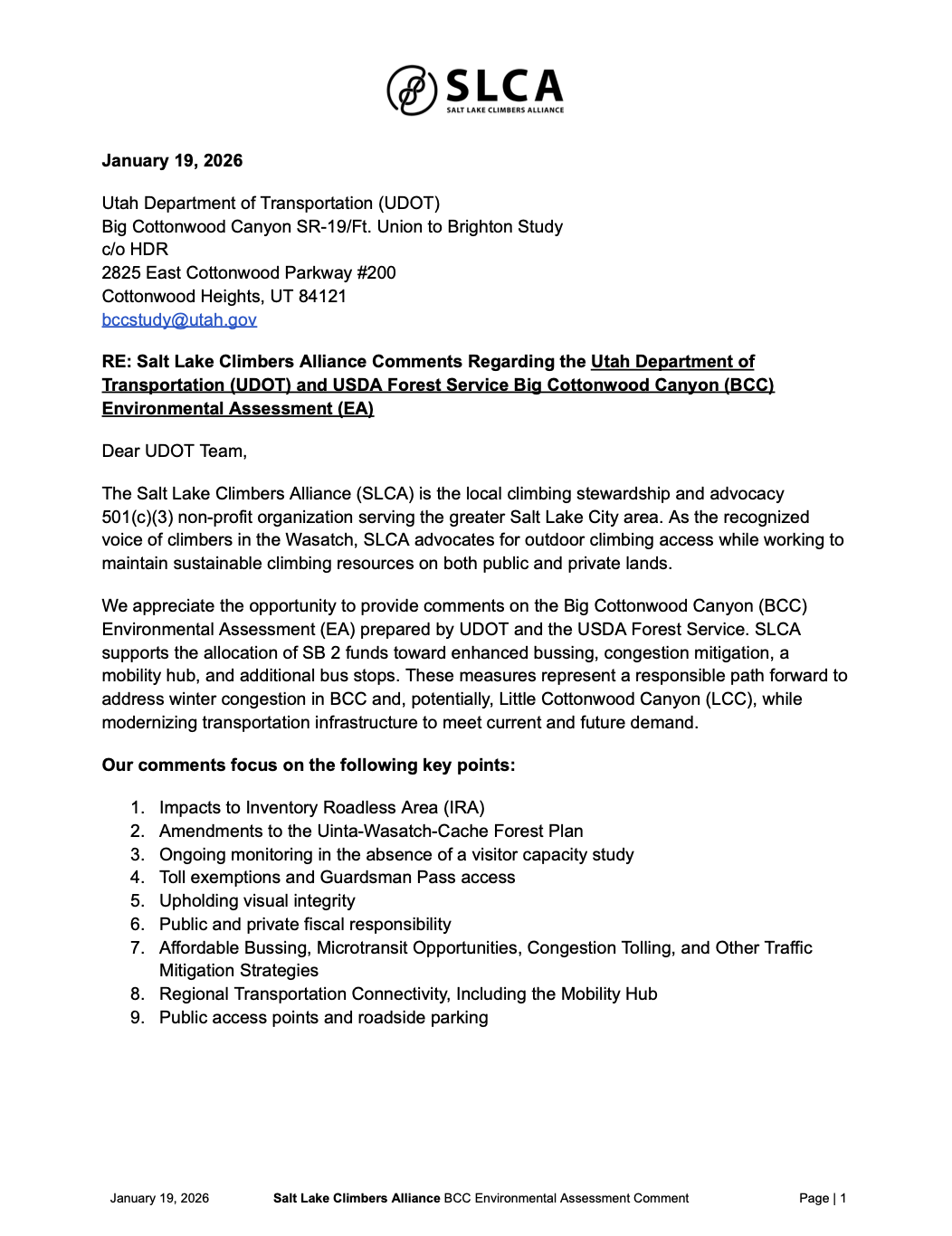
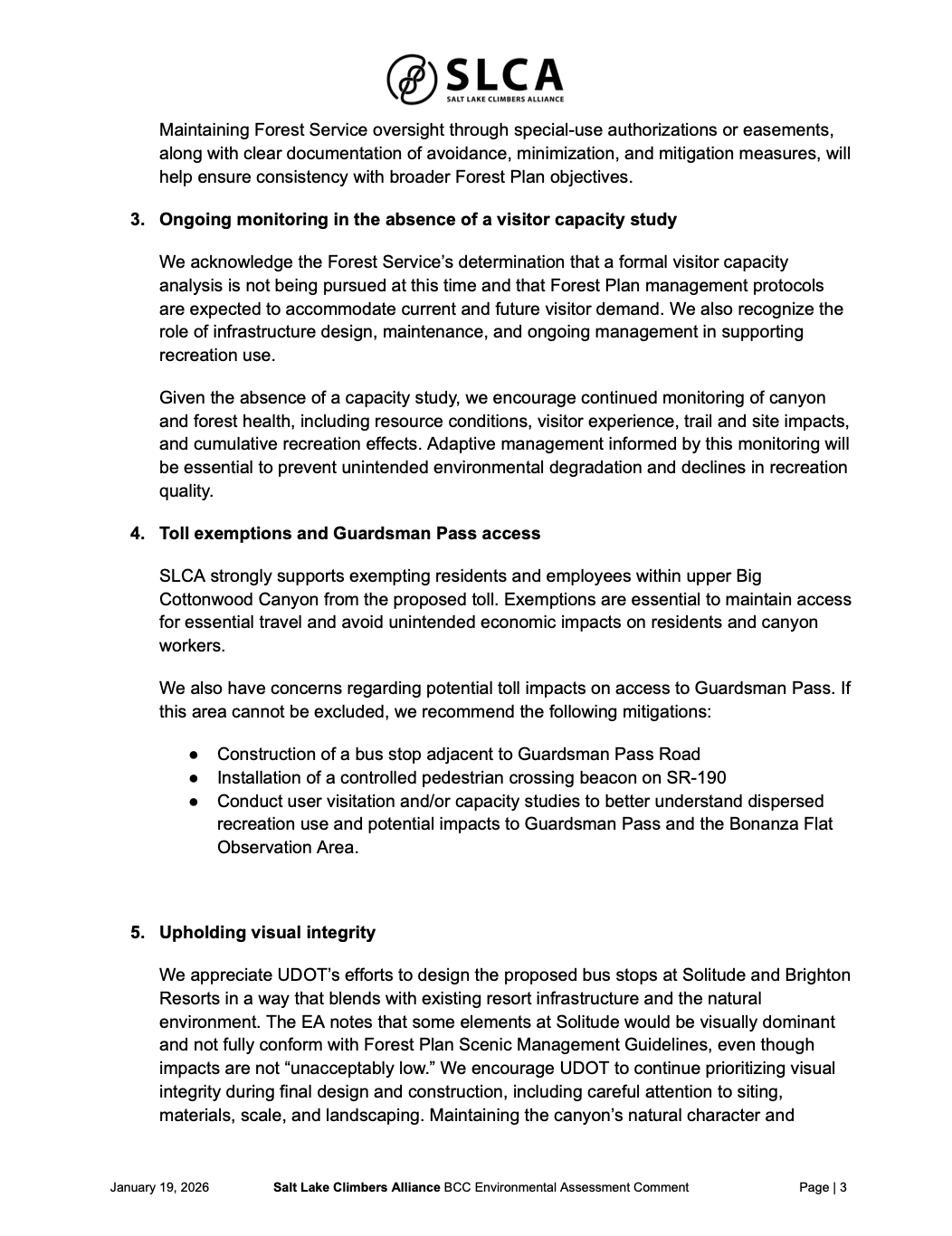
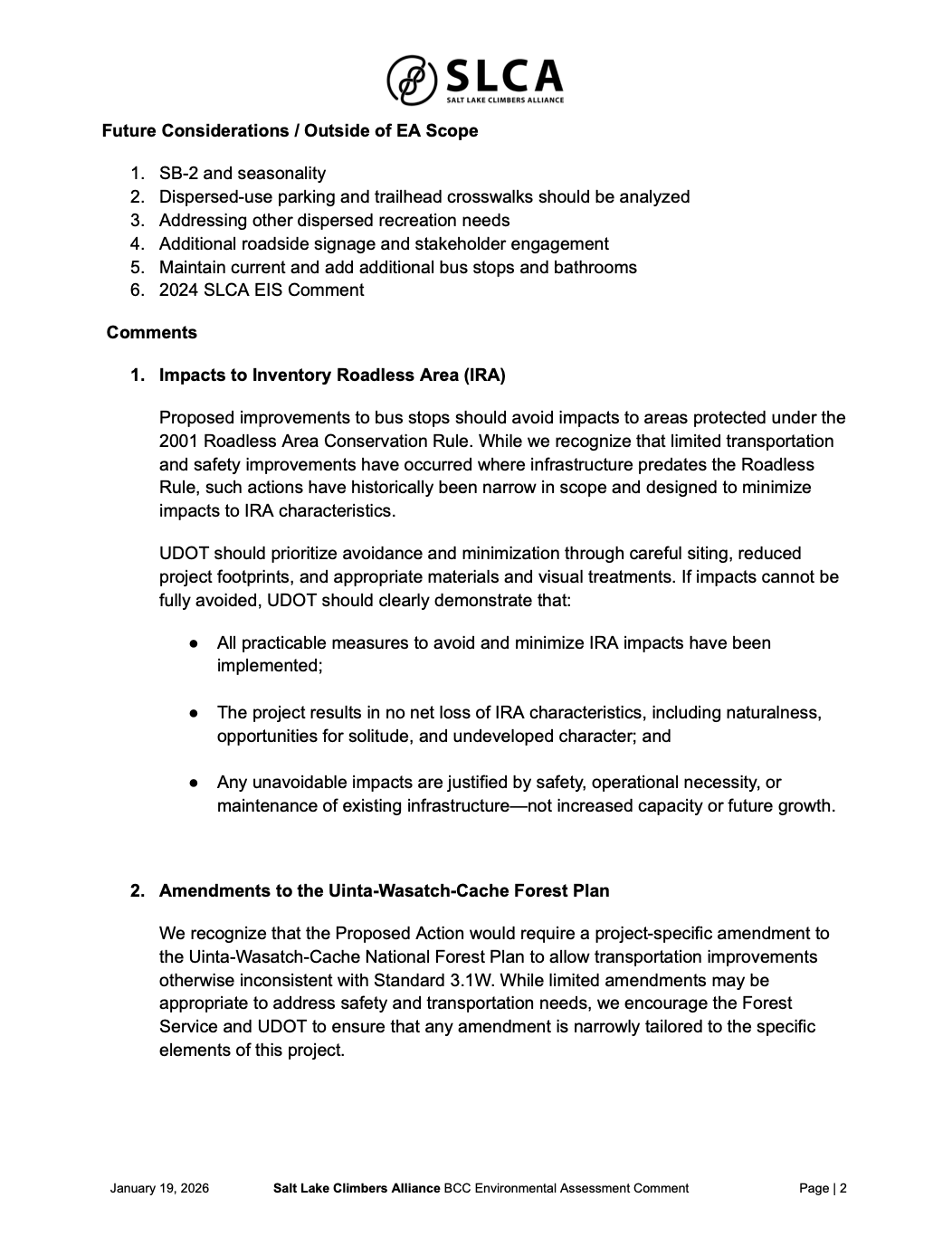
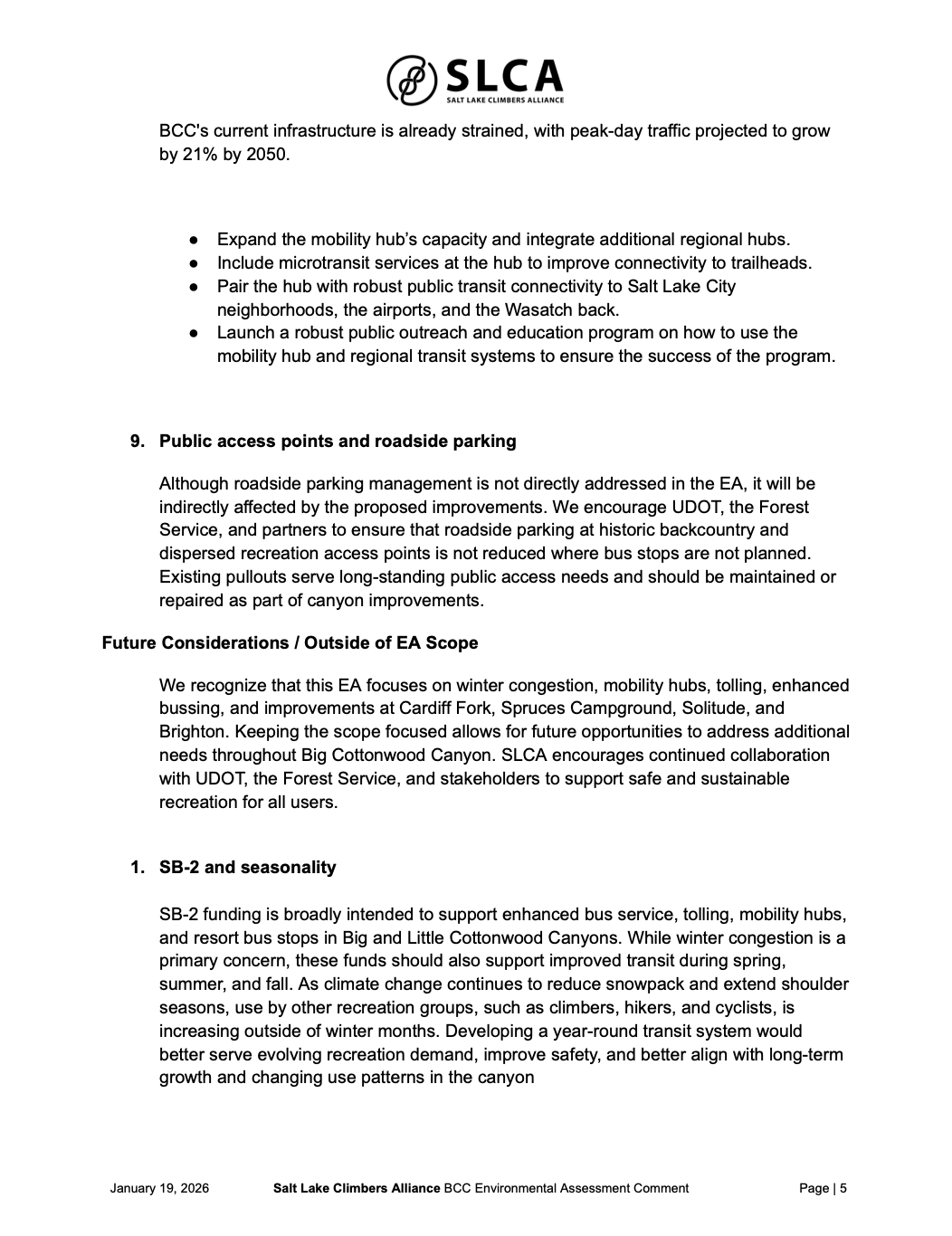
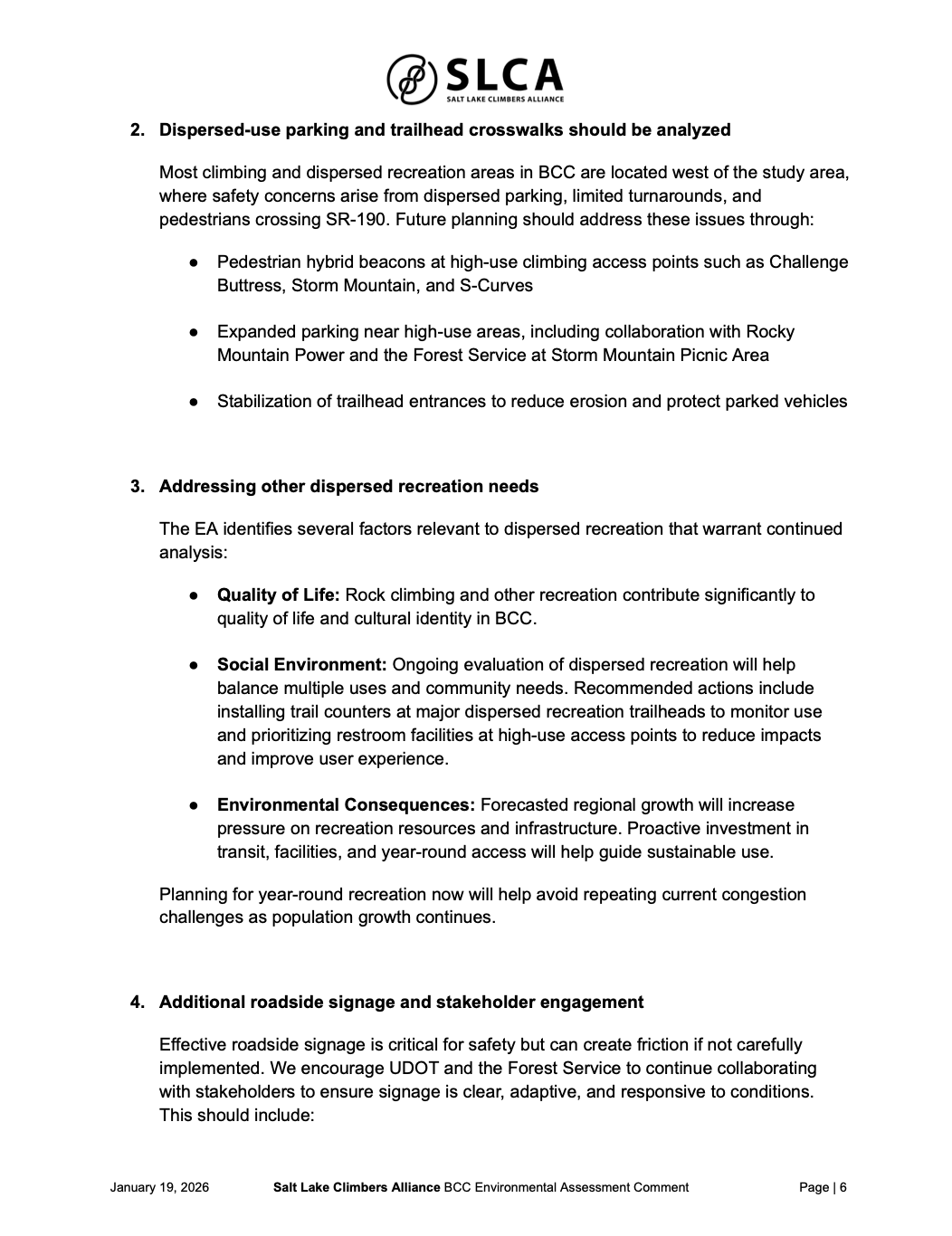
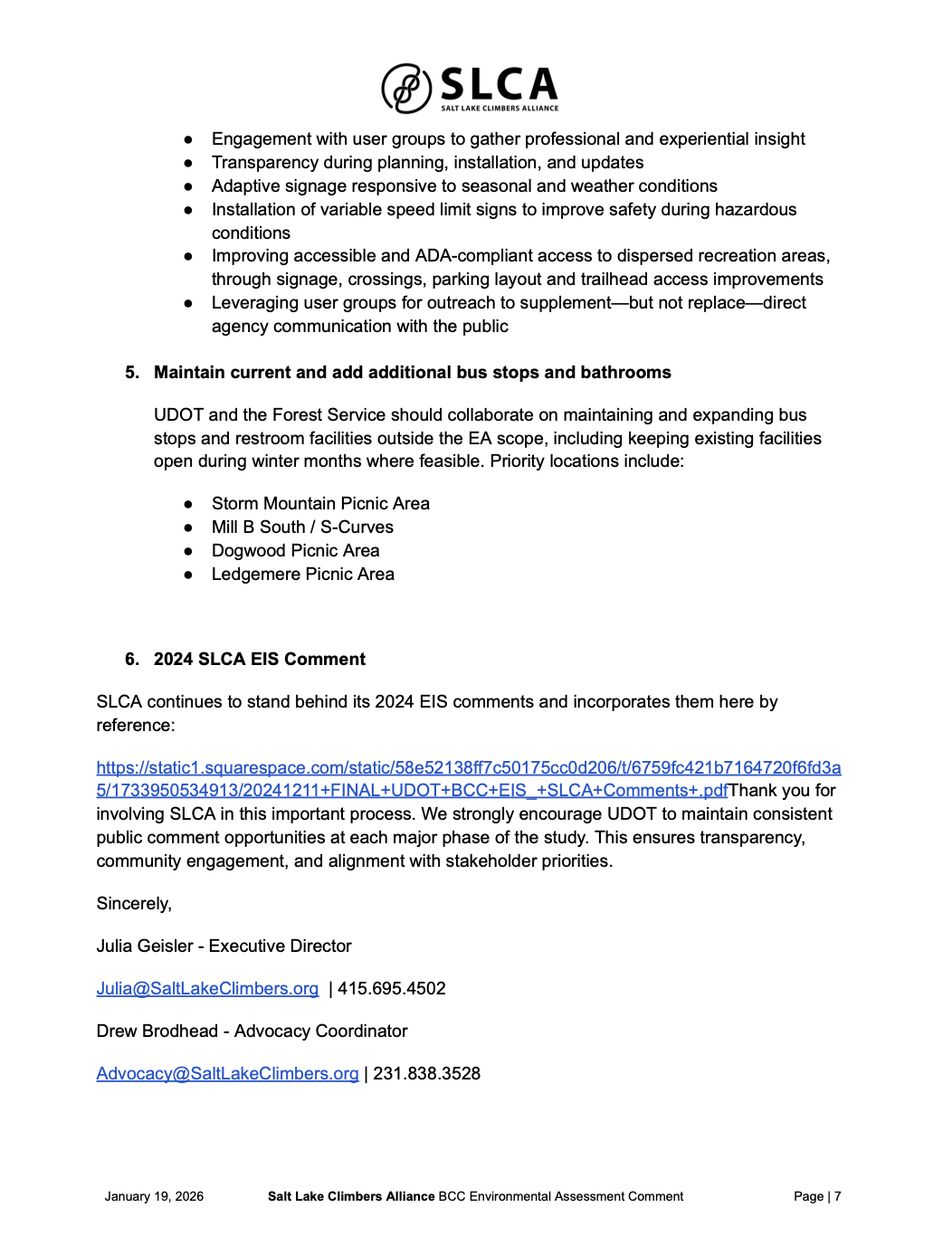
See our comments to UDOT HERE and below.
Big Cottonwood Canyon is a critical recreation corridor year-round, supporting climbers, hikers, cyclists, backcountry users, campers, day users and dispersed recreationists in addition to resort traffic. Transportation planning that overlooks these users risks reinforcing existing access inequities and missing the broader intent of sustainable canyon management.
The SLCA continues to advocate for climbers and dispersed recreation user groups while supporting balanced, forward-looking transportation solutions that work for all seasons. Below is our formal comment submitted to UDOT on the draft EA.