Advocacy: LCC Gondola in the Regional Transportation Plan
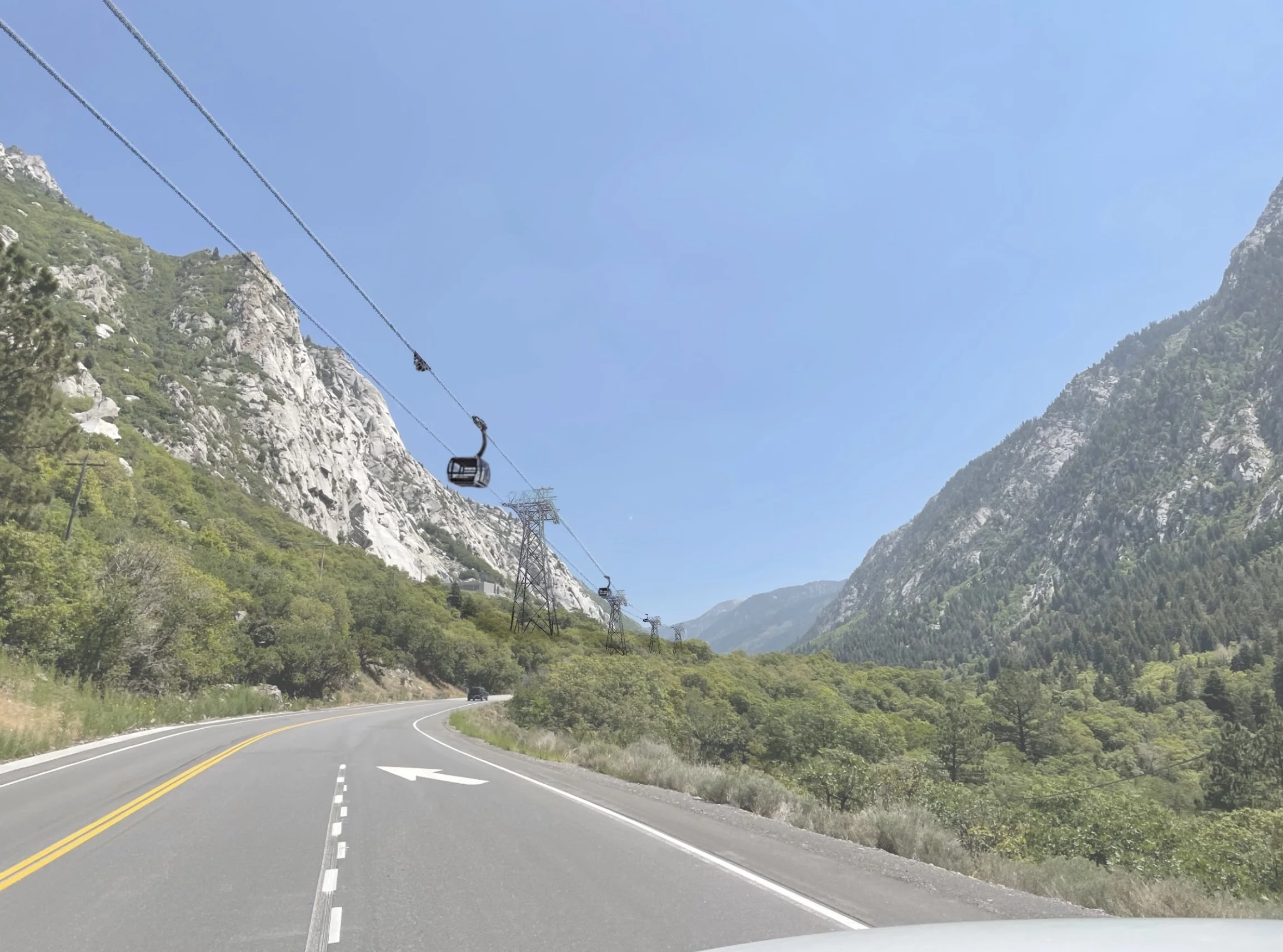
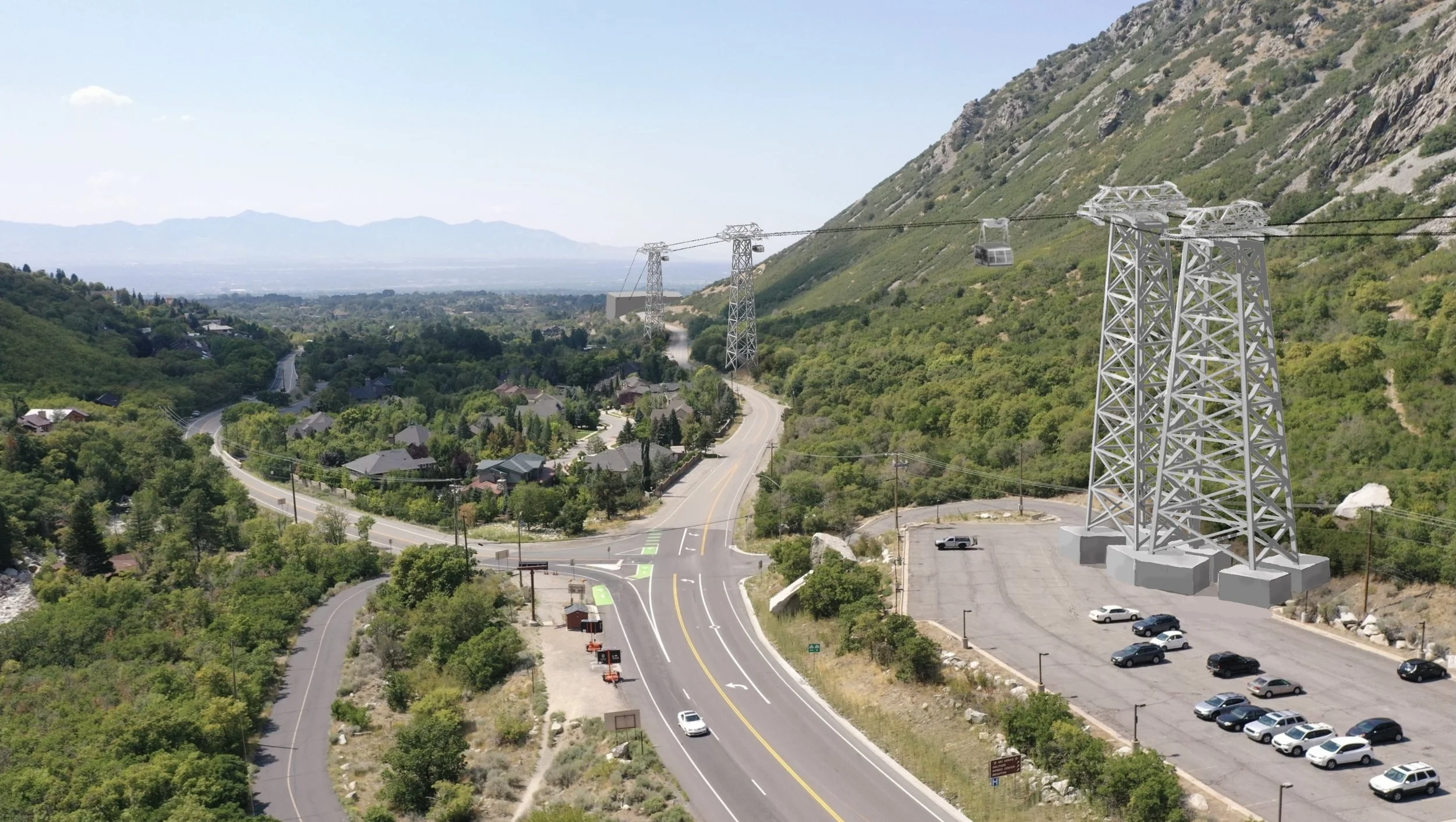
The Wasatch Front Regional Council (WFRC) has released its 2027–2055 Regional Transportation Plan (RTP). Despite overwhelming opposition, this revised version still includes the proposed Little Cottonwood Canyon (LCC) gondola—the preferred alternative from Utah Department of Transportation.
!We need you to speak up and take action!
Speak up and say no to the LCC Gondola!
“The world has changed so drastically. Climbing areas are always under threat. You can save it again and again—but once you lose it, you’ve lost it forever.”
— Ralph Tingey, climber, Alpenbock Climbing Club member, and Little Cottonwood Canyon first ascensionist
1) Submit a comment by May 13, 2026 on the interactive map (look for “Little Cottonwood Canyon Gondola / T-S-36” to leave a comment
2) Send a message to the WFRC using the pre-generated form
3) Call your WFRC representative, politely share your position, and ask how they plan to vote at the May 28th meeting
4) SHOW UP! Attend the May 28th meeting (time and place TBD)
Who is the Wasatch Front Regional Council and what do they do?
The Wasatch Front Regional Council is a regional planning organization serving six counties, 76 cities, and more than two million people along Utah’s Wasatch Front. It directs roughly $50 million in federal transportation funding to improve safety, reduce congestion, enhance mobility, and support the regional economy.
WFRC operates through consensus-building and data-driven planning to shape long-term transportation priorities that impact quality of life across the region. The council is made up primarily of elected officials—including mayors, city council members, and county commissioners—along with representatives from state agencies.
In 2023, WFRC adopted its most recent RTP, which included the gondola proposal from Utah Department of Transportation. During that process, there was significant public backlash. Despite widespread opposition and a large volume of public comments against the project, WFRC ultimately voted to keep the gondola in the plan.
Numbers don’t lie
When first proposed, the gondola carried an estimated cost of $550 million. Updated projections now place the cost closer to $1.4 billion—roughly $1,500 per Utah household.
This raises important questions about priorities. That level of investment could be directed toward other urgent regional needs, such as efforts to save the Great Salt Lake, which has significant environmental and public health implications for 2.8 million Utah residents.
Meanwhile, the gondola would primarily serve access to two privately owned ski resorts: Snowbird and Alta Ski Area.
Little Cottonwood Canyon — A Nationally Recognized Historic Site
Little Cottonwood Canyon is more than two ski resorts. It is a living, breathing canyon—an ecological lifeline for the Wasatch Front, a watershed that sustains millions, and a year-round refuge for climbers, hikers, skiers, and outdoor enthusiasts seeking connection to wild space just minutes from the city.
It is also a place of deep, irreplaceable history.
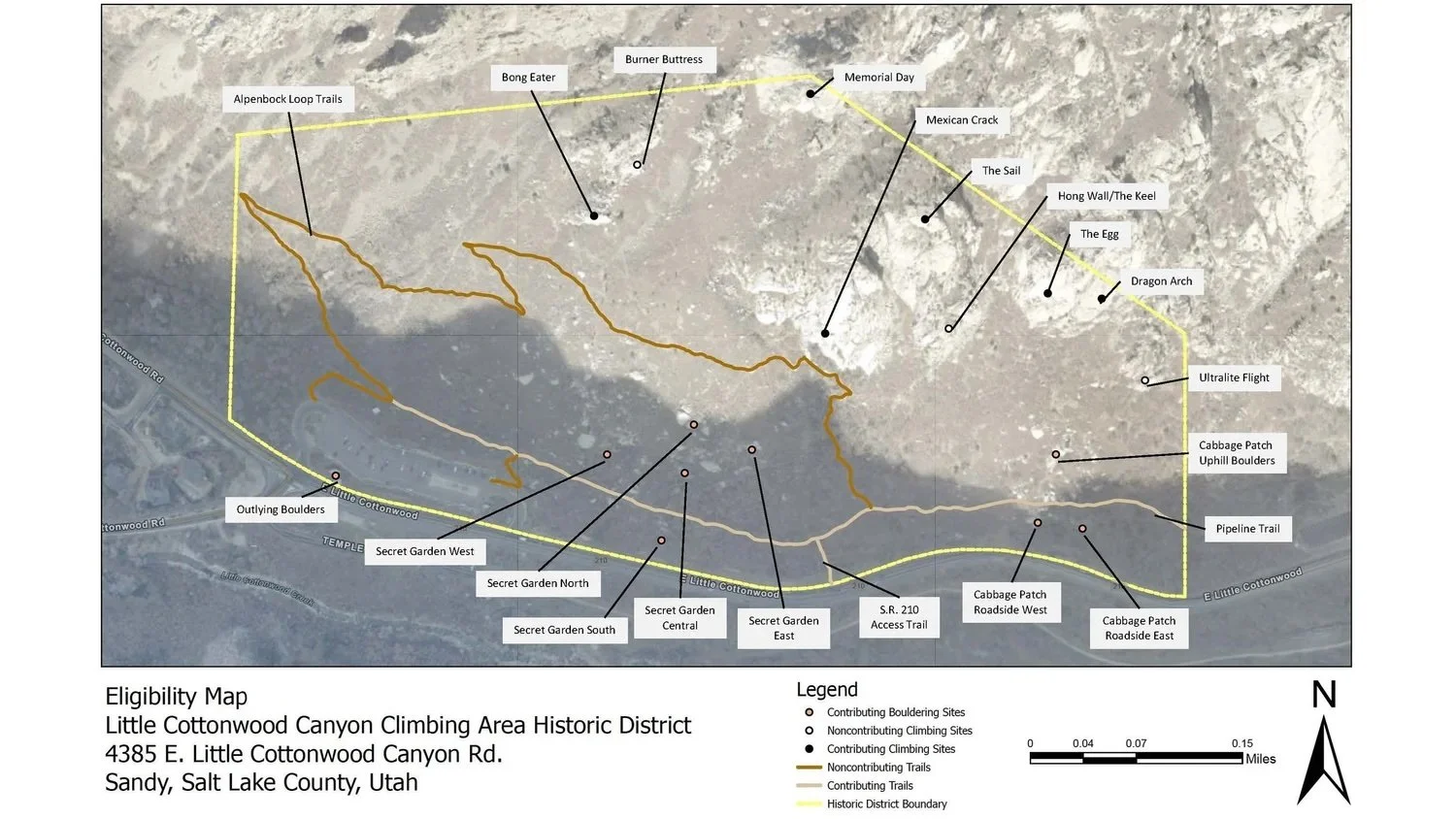
In 2024, the Alpenbock Loop area received formal recognition as one of the nation’s first historic climbing landscapes, honoring the legacy of the Alpenbock Climbing Club—a group that helped shape modern climbing in Utah and beyond. This designation includes nine historic boulders and six roped climbing sites, preserved in their original character.
These climbs are not replicas. They haven’t been reinvented or reimagined. They remain fundamentally the same lines envisioned by the Alpenbock Climbing Club—offering today’s climbers a rare chance to move over stone in the same way those early pioneers did. The sequences still flow as they were first imagined. The challenges still ask the same questions. And the experience still carries that original sense of discovery.
Climbing here isn’t just recreation—it’s a direct connection across generations, a way of stepping into the history of Little Cottonwood Canyon and experiencing it firsthand.
That kind of continuity is almost unheard of.
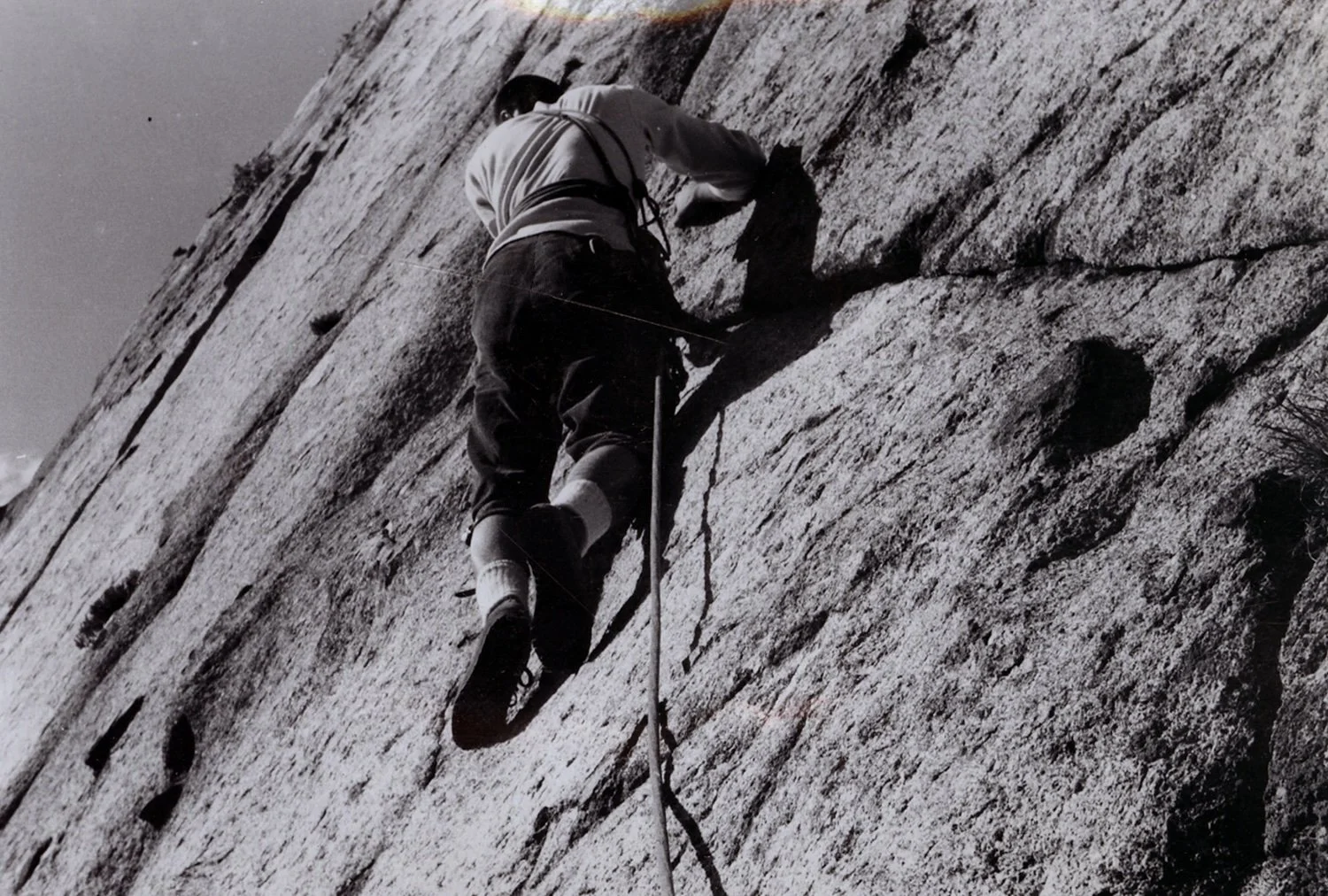
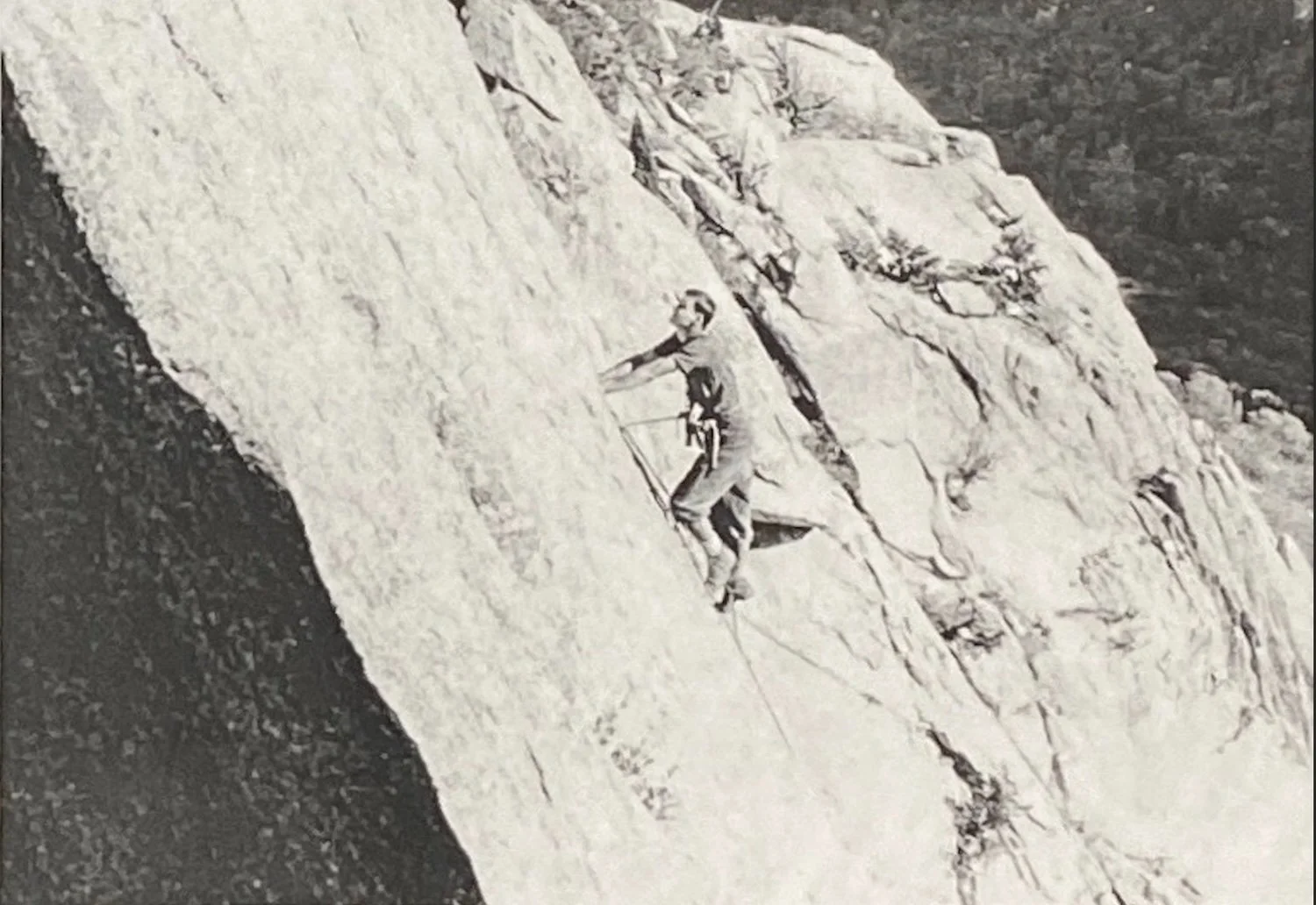
In a world where landscapes are constantly altered, developed, and reimagined, places like this are vanishingly rare. The Alpenbock Historic Climbing Area is not just a collection of climbs—it is a living archive, where history is not behind glass, but under your fingertips.
And beyond the climbing, the canyon itself offers something just as valuable: unobstructed views, natural quiet, and an accessible escape from urban life of Salt Lake City.
This is what’s at stake.
Because once places like this are altered, they cannot be restored to what they were.
And as Tingey reminds us—once it’s gone, it’s gone for forever.